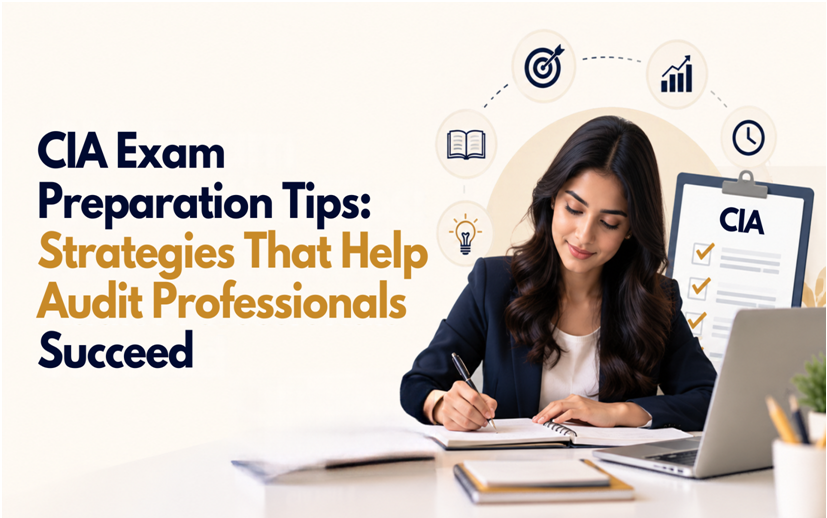
CIA Exam Preparation Tips: Strategies That Help Audit Professionals Succeed
Preparing for a professional certification exam can feel overwhelming, especially when balancing work responsibilities, personal commitments, and study goals. For internal audit professionals, the Certified Internal Auditor (CIA) designation remains one of the most respected credentials for demonstrating expertise in governance, risk management, internal controls, and auditing practices.
While the CIA journey requires commitment and consistency, the right preparation strategy can significantly improve confidence and exam readiness. Understanding how to approach the exam effectively is often just as important as understanding the subject matter itself.
Start With a Clear Study Plan
One of the most common mistakes candidates make is beginning preparation without a structured plan.
A study schedule helps candidates:
- Organize learning objectives
- Track progress consistently
- Avoid last-minute cramming
- Balance work and study commitments
- Allocate sufficient revision time
Breaking preparation into smaller weekly goals often makes the process more manageable and less stressful.
Understand the CIA Exam Structure
Before opening the first study book, candidates should understand how the exam is organized.
Knowing the exam structure helps professionals:
- Prioritize important topics
- Allocate study time effectively
- Identify stronger and weaker areas
- Build a realistic preparation timeline
A clear understanding of the exam format can eliminate uncertainty and improve focus throughout the preparation process.
Focus on Concepts Rather Than Memorization
Successful CIA candidates typically focus on understanding concepts rather than simply memorizing definitions.
Read More: Geography Gets a Glow-Up: How Independent Schools Are Modernising the Subject
Internal auditing involves applying professional judgment in different situations. Candidates who understand the reasoning behind audit principles often perform better when facing scenario-based questions.
Areas such as:
- Risk management
- Governance
- Internal controls
- Audit planning
- Audit execution
should be understood from a practical perspective rather than treated as isolated theory.
Use Practice Questions Regularly
Practice questions play a critical role in preparation.
They help candidates:
- Identify knowledge gaps
- Improve time management
- Become familiar with question styles
- Build exam confidence
- Reinforce key concepts
Many successful candidates incorporate practice questions into their daily study routine rather than waiting until the final stages of preparation.
Create a Consistent Revision Process
Revision is often where learning becomes long-term retention.
Instead of reviewing material only once, candidates should revisit important concepts regularly throughout their preparation journey. Effective revision techniques may include:
- Summary notes
- Flashcards
- Concept maps
- Short topic reviews
- Question-based revision
Frequent revision helps strengthen understanding and reduces the likelihood of forgetting earlier topics.
Read More: The 11+ and Beyond: Navigating the Independent School Admissions Process
Learn From Real-World Audit Scenarios
The CIA credential focuses heavily on practical application. Candidates who connect study topics with real workplace experiences often develop a stronger understanding of audit concepts.
For example:
- Governance frameworks can be linked to organizational structures.
- Risk management concepts can be connected to actual business risks.
- Internal controls can be evaluated using real operational examples.
Applying theory to practice often makes preparation more engaging and effective.
Manage Study Time Efficiently
Many CIA candidates prepare while working full-time. In such situations, consistency is usually more valuable than long study sessions. Even dedicated daily study periods can produce significant results over time when maintained consistently.
Successful candidates often:
- Set weekly targets
- Track completed topics
- Schedule revision sessions
- Reserve time for practice questions
- Monitor preparation progress
Small but consistent efforts tend to create sustainable learning habits.
Avoid Common Preparation Mistakes
Candidates can improve their preparation by avoiding several common mistakes:
Studying Without a Plan
Lack of structure often leads to uneven topic coverage.
Ignoring Practice Questions
Theory alone may not adequately prepare candidates for exam-style questions.
Delaying Revision
Leaving revision until the final weeks can create unnecessary pressure.
Focusing Only on Strong Areas
Balanced preparation requires attention to weaker topics as well.
Recognizing these mistakes early can improve overall study effectiveness.
Stay Motivated Throughout the Journey
Professional certifications require persistence. Motivation often fluctuates during long preparation periods, which is why candidates should focus on consistent progress rather than perfection.
Tracking completed milestones, celebrating small achievements, and maintaining realistic expectations can help candidates remain committed throughout the process.
Professionals looking for additional guidance can explore these detailed CIA Exam Preparation Tips.
Final Thoughts
Success in the CIA exam is rarely the result of last-minute studying. It is usually achieved through structured preparation, regular practice, continuous revision, and a strong understanding of internal audit principles.
Candidates who approach preparation with discipline and consistency often place themselves in a stronger position for success. For professionals seeking structured learning resources, mentorship, and certification preparation support, Academy of Internal Audit (AIA) offers training programs designed to help audit professionals build knowledge, confidence, and career growth opportunities.