How to Build a Strong Design Portfolio for NID, NIFT, and UCEED
For most students preparing for design entrance exams, the word “portfolio” immediately creates pressure. Many students assume that only people who are naturally gifted at drawing can create impressive portfolios. Some think portfolios should look extremely professional or similar to the polished projects they see online. Others spend hours comparing themselves to artworks on Instagram and Pinterest and slowly start doubting their own creativity. But the truth is, design portfolios are not meant to showcase perfection. They are meant to showcase potential
When colleges like NID, NIFT, or UCEED look at a student’s portfolio, they are not simply checking whether the student can draw realistic portraits or create fancy artworks. They want to understand how the student thinks, how they observe the world, how curious they are, and how they approach creativity. A portfolio is less about “showing finished art” and more about revealing the student behind the work.
This is something many aspirants realize very late during preparation. Students often spend months trying to make everything look perfect instead of developing genuine creative thinking. The reality is that design education is not about producing identical artists. It is about encouraging individuality, experimentation, observation, and problem-solving.
Read More: How IT Professionals Can Level Up Without Hitting Career Burnout
A strong portfolio usually comes from students who are willing to explore ideas honestly instead of trying too hard to impress. Even simple sketches, rough explorations, unfinished concepts, or observation studies can become powerful when they feel original and personal.
One of the biggest mistakes students make while building portfolios is trying to create work that “looks like design work” instead of creating work that genuinely reflects their thinking. As a result, many portfolios start looking identical. Same layouts, same Pinterest-inspired illustrations, same copied aesthetics. But the portfolios that usually stand out are the ones that feel authentic and human.
For example, a student who sketches people at bus stops every day, observes body language, experiments with visual storytelling, and documents daily life often develops stronger design sensitivity than someone who spends all their time copying online illustrations. Observation slowly becomes the foundation of creative thinking.
This is why students preparing for design entrance exams should spend more time observing the world around them. Everyday life itself becomes a huge source of inspiration. Small details that most people ignore — street vendors arranging fruits, children playing in parks, crowded marketplaces, public transport, old buildings, shadows, textures, and human interactions — can become excellent sources for visual exploration.
Design colleges are not expecting students to arrive as professionals. They want students who are curious enough to notice details and think independently.
That is also why sketchbooks become extremely important during preparation. A sketchbook is not just a place to practice drawing. It becomes a visual diary where students collect thoughts, ideas, compositions, experiments, textures, observations, and inspirations from daily life. Over time, sketchbooks reveal consistency, curiosity, and growth — qualities that design colleges genuinely value.
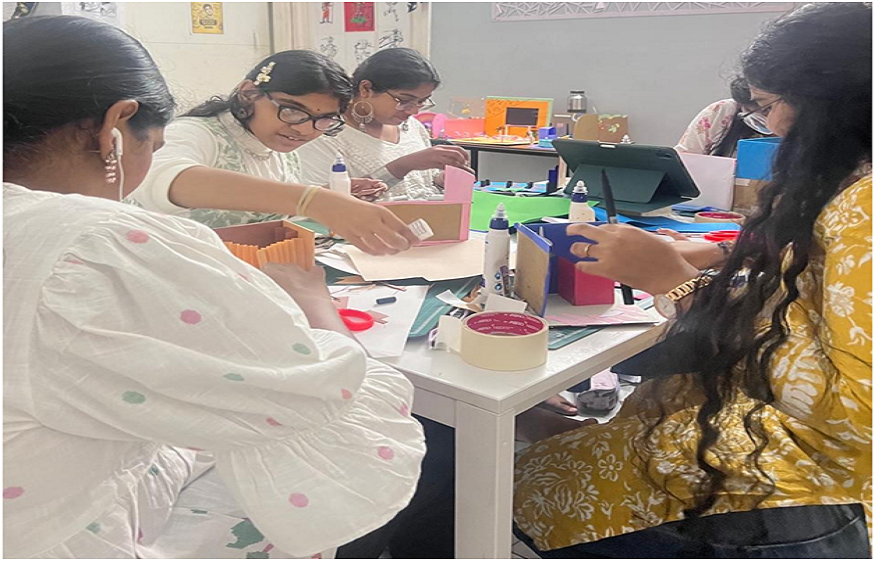
Many students also worry too much about whether their portfolio should be digital or handmade. In reality, both are acceptable. Handmade work often feels raw and expressive, while digital work can show presentation skills and modern visual understanding. What matters more is whether the work feels thoughtful and original.
Students should also remember that portfolios are not supposed to contain only polished final artworks. In design education, the process behind the work is often more important than the final result itself. Rough ideation sheets, mind maps, thumbnails, visual experiments, color trials, material exploration, failed concepts, and developmental sketches all help colleges understand how a student thinks.
Sometimes, a page filled with rough visual thinking can say much more about a student’s creativity than a perfectly polished artwork.
Another important aspect of portfolio building is variety. Students should avoid creating repetitive work that feels visually identical throughout the portfolio. A strong portfolio usually contains a healthy mix of:
- Observation sketches
- Storytelling exercises
- Photography
- Craft work
- Typography exploration
- Color compositions
- Conceptual projects
- Creative problem-solving exercises
- Material experiments
- Design process work
This variety helps demonstrate flexibility and openness to exploration.
At the same time, quality matters more than quantity. Students often believe they need a huge portfolio filled with dozens of artworks. But a smaller portfolio with thoughtful and well-developed work is usually much stronger than a bulky collection of average pieces.
Presentation also plays an important role. Even excellent work can lose impact if it is poorly organized. Portfolios should feel clean, easy to navigate, and visually balanced. Students do not need overly complicated layouts. Simplicity often works better because it allows the work itself to stand out.
One of the reasons many students struggle during portfolio preparation is because they do not know what colleges actually expect. Some focus entirely on realistic rendering. Others spend too much time copying trends from social media. Many students are creative but simply lack direction.
This is where proper guidance and mentorship become valuable. Students need feedback not only on technical skills but also on observation, ideation, composition, and storytelling.
If you’re looking for coaching for design entrance exams, mad school is the best way to go forwardChoose the location you please based on where you live
At MAD School, students are encouraged to explore creativity beyond just drawing techniques. The focus is not only on helping students crack entrance exams, but also on helping them develop confidence, originality, and creative thinking in a practical and personal way. Instead of forcing students into one style, the learning environment encourages experimentation and individual growth, which makes a huge difference during portfolio preparation.
Students are guided to understand that creativity is not about making everything look perfect. It is about learning how to think differently, solve problems visually, and communicate ideas effectively.
Portfolio preparation classes for NIFT situation test and nid studio test also teaches something much bigger than exam preparation — patience. Creativity does not improve overnight. Design thinking develops gradually through observation, experimentation, curiosity, and consistency. Students who practice regularly, even for short durations every day, often improve more than students who suddenly begin intense preparation a month before exams.
The journey can definitely feel frustrating sometimes. There will be days when ideas do not work, sketches feel disappointing, and self-doubt becomes overwhelming. But that experience is a natural part of every creative process. Every designer goes through phases of uncertainty.
The important thing is to continue creating despite that uncertainty.
Students should also avoid comparing themselves constantly with others online. Social media often creates unrealistic expectations about creativity. It is important to remember that portfolios are not competitions to create the most polished artwork. Colleges are looking for individuality and originality.
A portfolio should feel personal.
At the end of the day, a strong design portfolio is not about proving that a student is already a professional designer. It is about showing curiosity, imagination, observation, consistency, and willingness to learn.
Read More: How Outsourcing Your Online Classes Can Become a Time-Management Choice
That is what truly makes a design aspirant stand out.
For students who genuinely enjoy observing the world, experimenting creatively, and expressing ideas visually, portfolio preparation eventually becomes much more than just exam preparation. It becomes the beginning of their creative journey.